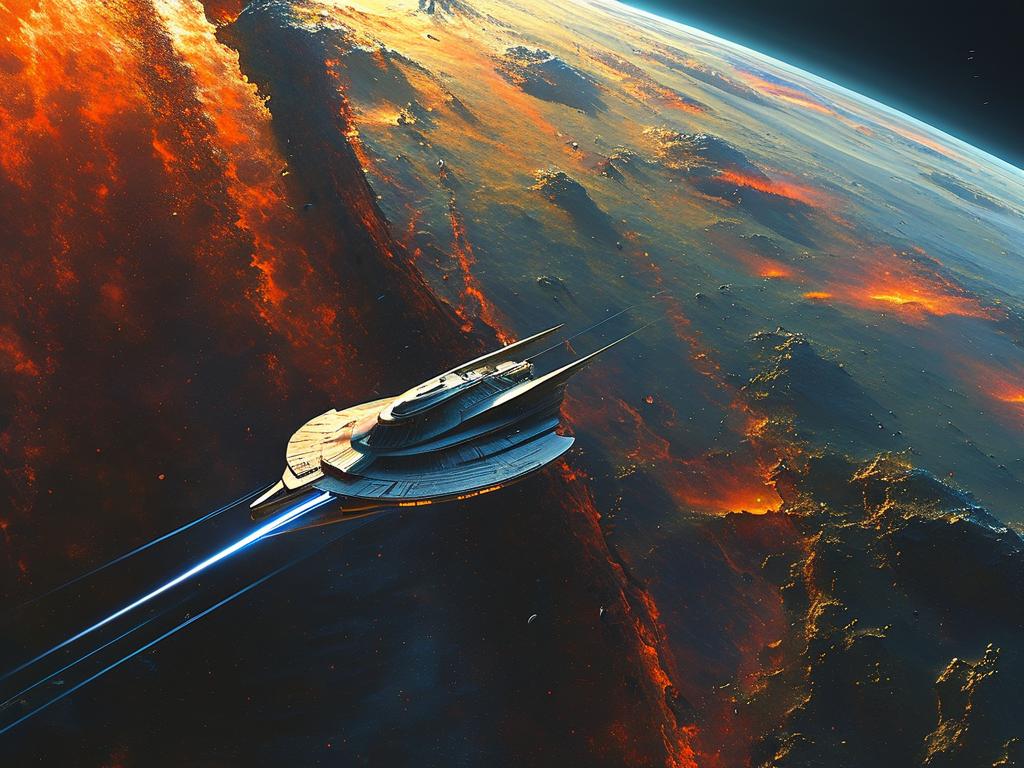
Nano Banana 2: Google's New AI Image Model, Explained
Nano Banana 2: Google's Revolutionary AI Image Model Explained
Google dropped Nano Banana 2 on February 26, 2026, and almost immediately claimed the top spot on Arena.ai's prestigious ranking system. The response was explosive—social platforms became showcases for remarkable output: flawless character renders, marketing materials with impeccable typography, and sequential artwork maintaining perfect consistency across multiple frames.
Why are developers calling subject consistency "transformative"? How does this system achieve near-Professional quality at roughly half the previous price point? Let's explore what makes this technology distinct.
Introducing Nano Banana 2
Nano Banana 2 (official designation: Gemini 3.1 Flash Image) represents Google's most advanced AI image synthesis and editing platform. This third-generation release builds upon two predecessors: the original Nano Banana (Gemini 2.5 Flash Image) and Nano Banana Pro (Gemini 3 Pro Image).
The revolutionary aspect of Nano Banana 2 lies in its hybrid architecture—it merges the premium output quality and advanced capabilities of the Pro tier with the accelerated generation speed and reduced operational costs of a Flash model. Users no longer face the traditional compromise between speed/affordability and quality/expense.
Currently, Nano Banana 2 serves as Google's default image engine across its entire product ecosystem, powering Gemini applications, Google Search's AI capabilities, the Flow video editor, Google Ads creative tools, and numerous developer interfaces.
What's Driving the Adoption
Blazing Fast Speed
Nano Banana 2 completes image generation in under 5 seconds—that's 2-5x faster than older Pro models. This means you can test ideas and iterate without breaking your creative flow.
Affordable for Everyone
Priced at roughly $0.067 per 1,000 generations via API, Nano Banana 2 delivers approximately 95% of Pro quality at half the cost. This value proposition has makes professional-level image generation accessible to indie developers, small businesses, and solo creators who couldn't justify the higher costs before.
Creators Love It
The platform caught fire on X and Reddit, with users sharing tips and calling it a game-changer. The quirky "Nano Banana" name has even become recognizable in the creator community.
Pro Features for Free
Capabilities previously requiring Pro subscriptions—precision text rendering, comprehensive language support, advanced subject consistency—are now available to free-tier users through Nano Banana 2.
What It Can Do
Knows the Real World
Nano Banana 2 uses Google's knowledge with live web search. This can accurately show:
- Geographic landmarks and architectural sites
- Current events and statistical information
- Commercial products and brand identities
- Weather-specific visual elements
When prompted with "Eiffel Tower during golden hour with autumn clouds," Nano Banana 2 uses reference data to keep it looking real instead of making up a generic tower.
Text That Actually Works
AI image generation has always struggled with text—misspelled words, garbled letters, unreadable fonts. Nano Banana 2 solves these problems with:
- Per-character text validation
- Accurate multilingual rendering (including complex scripts like Chinese, Japanese, Arabic)
- In-image text conversion preserving style and lighting context
- Great for marketing graphics, data visualizations, memes, and promotional materials
Consistent Characters Every Time
For storytellers, comic artists, and brand designers, keeping characters consistent has been nearly impossible. Nano Banana 2 enables:
- Simultaneous tracking of 5 distinct characters across multiple generations
- Consistency for 14 objects within a single creative session
- Stable representation of clothing, features, and styling throughout sequences
This changes everything for storyboarding, multi-panel stories, and brand-consistent designs.
Flexible Output Options
Nano Banana 2 handles different output needs:
- Resolution Options: 512px, 1K, 2K, and 4K (3840×2160)
- Standard Aspect Ratios: 16:9, 4:3, 1:1, 9:16
- Extended Ratios: 4:1, 1:4, 8:1, 1:8 (for panoramic and banner applications)
This versatility makes Nano Banana 2 suitable for applications ranging from social media content to large-format print production.
Speed vs Quality Modes
Developers can adjust how the model thinks:
- Minimal (default setting): Fastest for simple prompts
- High/Dynamic: Better analysis for complex, detailed instructions
You can choose what works best for your project.
Built-in Safety Features
Every Nano Banana 2 output incorporates:
- SynthID digital watermarking: Invisible pixel-level ID
- C2PA Content Credentials: Metadata that proves it's AI-made
This helps identify AI content across platforms.
How to Use It
Easy Access for Everyone
The most straightforward entry point:
- Launch the Gemini application (desktop or mobile interface)
- Authenticate with Google credentials (age restriction: 18+)
- Select image creation from tools menu or activate via banana icon
- Input prompt and generate
For editing workflows:
- Upload source imagery
- Specify modifications (e.g., "Replace setting with coastal scene")
- Generate edited version
Works with Google Search
Nano Banana 2 functionality extends to:
- Google AI Mode: Direct image generation from search interface
- Google Lens: Image modification and transformation
- Coverage: 141 countries
For Developers
Technical access channels include:
- Google AI Studio: Pre-release testing environment
- Gemini API: Production deployment
- Vertex AI: Enterprise-level implementation
- Google Antigravity: Advanced developer utilities
Better Prompts, Better Results
For optimal Nano Banana 2 results:
- Specify Completely: Include aesthetic direction, illumination, camera perspective, emotional tone
- Structure Prompt: Subject → Action → Setting → Style framework
- Leverage World Knowledge: Reference real-world elements for accuracy
- Configure Processing: Apply "enhanced thinking" for complex compositions
Sample Prompts
Commercial Product Shot:
Streamlined black mechanical keyboard against seamless white studio surface,
executive product aesthetic, softbox configuration, razor-sharp focus,
4K output specification
Character Study:
Film-style portrait featuring young woman with auburn tresses, sunset
illumination, narrow focus range, film texture applied, warm amber
tone grading
Promotional Graphic:
Seasonal discount announcement, prominent typography "50% OFF" positioned
centrally, energetic coastal backdrop, professional graphic design aesthetic
How It Compares
| Capability | Nano Banana 2 | Nano Banana Pro |
|---|---|---|
| Generation Speed | Sub-5-second | Extended (10-30 seconds) |
| API Pricing | ~$0.067/1K images | ~$0.134/1K images |
| Output Quality | 95% of Pro standard | 100% (marginal realism advantage) |
| Text Precision | Superior | Superior |
| Subject Consistency | 5 characters, 14 objects | 5 characters, 14 objects |
| Knowledge Integration | Full real-time search | Full real-time search |
| Optimal Use Case | Speed, efficiency, volume | Maximum precision, authenticity |
Why Alternatives Fall Short
Working outside Nano Banana 2 introduces significant obstacles:
Workflow Delays
Previous generation models require 10-30 seconds per image, disrupting creative flow and making iterative experimentation prohibitively time-consuming.
Continuity Challenges
Multi-scene narrative creation demands extensive manual intervention to maintain character consistency—often requiring multiple generation attempts and post-processing correction.
Text Rendering Deficiencies
Character errors, font distortion, and language restrictions complicate production of marketing materials, information graphics, and promotional content.
Cost Barriers
Professional-quality output previously demanded premium subscriptions or API expenditure—excluding many creators from high-grade production capabilities.
Accuracy Limitations
Without web search integration, systems generate inaccurate representations of landmarks, products, and locations—producing unsatisfactory results for commercial applications.
Who Should Use It
Social Media and Content Creation
- Generate platform-optimized visuals (Instagram, TikTok, YouTube thumbnails)
- Produce brand-coordinated content at scale
- Execute rapid concept iteration for A/B testing
Marketing and Advertising
- Automated multilingual ad creative production
- Product visualization and lifestyle imagery
- Information graphics with accurate data representation
- Regional campaign localization
Narrative and Sequential Art
- Maintain character consistency across panels
- Generate storyboard sequences for film and video
- Produce character reference sheets and style guides
Software Development
- Integrate image generation into applications
- Construct cost-effective visual creation platforms
- Implement dynamic landing page imagery
Digital Commerce
- Generate product lifestyle photography
- Create seasonal promotional visuals
- Produce catalog content without photography sessions
Education and Analysis
- Convert data sets into clear visualizations
- Develop presentation graphics
- Generate instructional materials and technical diagrams
Pricing & Availability
Consumer Access
- Complimentary Tier: Available via Gemini app with daily limitations (~100 images/day)
- Premium Subscription: Increased limits for paid subscribers
- Age Requirement: 18+ verification
API Access
- Usage Cost: ~$0.067 per 1,000 generations (approximately 66 images per $10)
- Billing Structure: Consumption-based via Google Cloud
- Access Points: Google AI Studio, Gemini API, Vertex AI
Where It's Available
Nano Banana 2 currently operates in 141 countries through Google's product network, with continued expansion planned throughout 2026.
What Users Say
What People Love
- "Character consistency finally works" — Independent developers highlighting subject continuity
- "Prompt following significantly improved" — Creators acknowledging enhanced instruction adherence
- "Natural hand and face rendering" — Users noting reduced anatomical artifacts
- "Minimal post-production needed" — Designers valuing production-ready outputs
- "Ideal for narrative workflows" — Comic and storyboard professionals
Areas for Improvement
- Certain users indicate that extreme positions and complex compositions still require precise prompting
- Occasional reviewers note aesthetic quality hasn't dramatically exceeded Pro standards
- Intermittent artifacts in edge-case scenarios
The Verdict
General sentiment approaches 4.5/5—users commend velocity, economic efficiency, and platform integration while recognizing Pro may maintain slight advantages for maximum fidelity applications.
FAQ
How does Nano Banana 2 compare to the original?
Nano Banana 2 substantially improves prompt precision, photorealism, character consistency, and typography quality while incorporating real-world knowledge integration.
Does it support image transformation workflows?
Yes. Nano Banana 2 enables image-to-image conversion, allowing reference uploads and text-directed modification.
Can it maintain character identity across sequences?
Yes. Nano Banana 2 preserves up to 5 characters across multiple images within a single session, with markedly improved consistency versus prior versions.
Does it handle stylized content like anime?
Yes. Nano Banana 2 processes anime and stylized artistic content effectively, contingent upon prompt quality and detail specificity.
What about commercial usage permissions?
Nano Banana 2 permits commercial applications within legal frameworks. Verify licensing terms specific to your access platform.
How does it perform for product visualization?
Nano Banana 2 excels at product photography, marketing materials, and lifestyle mockups—particularly effective for social advertising and landing page applications.
Are hand renderings accurate?
Nano Banana 2 produces superior hand representations compared to earlier systems, with reduced distortion and anatomical errors, though complex positioning may still benefit from careful prompting.
Can it modify existing text within images?
Yes. Nano Banana 2 can edit, replace, and translate embedded text while preserving original style, illumination, and composition.
What's the generation speed?
Nano Banana 2 typically completes generation in under 5 seconds—2-5x faster than previous Pro iterations.
Is it accessible for beginners?
Yes. Nano Banana 2 provides beginner-friendly access via Gemini application, though structured prompts yield optimal results. The learning curve compares favorably to more technical platforms.
What's the maximum output resolution?
Nano Banana 2 supports resolutions to 4K (3840×2160), suitable for professional and print applications.
Does it handle Chinese characters?
Yes. Nano Banana 2 features significantly improved multilingual typography, including accurate generation of Chinese, Japanese, Korean, and additional languages.
How can I identify Nano Banana 2 generated content?
All Nano Banana 2 output incorporates invisible SynthID digital watermarking and supports C2PA Content Credentials for content verification.
What's the cost structure?
Nano Banana 2 provides complimentary access via Gemini with daily limitations. API integration and higher volumes require usage-based payment.
Bottom Line
Nano Banana 2 marks substantial advancement in AI image synthesis. By merging Pro-level quality with Flash-class speed and accessibility, it eliminates traditional compromises that have constrained AI creative tools.
For creators: accelerated iteration, reduced costs, production-ready output minimizing post-processing requirements. For developers: cost-effective professional image generation integration. For businesses: scalable visual content creation without dedicated design personnel for each asset.
Nano Banana 2 is now accessible via Gemini applications, Google Search, Google AI Studio, and Gemini API—positioned to transform your visual content creation workflow.
Whether you're a solo entrepreneur requiring marketing assets, a narrative creator constructing consistent sequences, or a developer building next-generation creative platforms—Nano Banana 2 delivers necessary capabilities at sensible value points.
